Pages

Showing posts with label family history. Show all posts

Friday, June 6, 2014

James Eyre and Ann Naylor


I have read parenting books from Richard and Linda Eyre since I was a young mother.
A few years ago, I started following their daughter, Shawni's blog and I read it most
every day.
It was cool to me when I found out that we are related through James Eyre and Ann Naylor.

I love how James was faithful, even when he was kicked out of his home by his landlord for joining the church


A BRIEF HISTORY OF JAMES EYRE AND ANN NAYLOR James Eyre was born 29 July 1795, Quarrington, Lincolnshire, England. Died September 1865 on Ham’s Fork along a pioneer trail which is near what is now known as Little America in Wyoming. Ann Naylor was born 12 November 1798, Heckington, Lincolnshire, England. Died May 1865 on board the ocean vessel “Bellwood” while crossing the Atlantic Ocean. Edwin Eyre, Sr., The son of James and Ann Eyre, was born April 16 1845 at Great Dowsby, Lincolnshire, England. He was one of a family of 16. His father being a farmer and shepherd, it was natural, due to custom and conditions at that time, that Edwin became a tiller of the soil. He worked on his father’s farm and surrounding farms during his early teens and up to the time of his leaving England. He has always been classed as one of the most efficient farmers, wherever he has tilled. His mother, Ann Naylor Eyre, was a faithful, diligent farmer’s wife and a mother in the broadest sense of the term. Her life was spent doing daily the many duties of a farmer’s wife. Her high hope was to see her sons and daughters faithful and serviceable in the cause of Jesus The Christ. We shall find evidence, before reading many pages of the life of her son, that her ideal was realized as far as he was concerned. Her soul has rejoiced and praised the Lord for the noble work and unceasing fight of her son Edwin in the defense of truth. Educational conditions of England in the latter part of the 19th century were only favorable to the privileged classes. It was utterly out of the question for a boy of a farmer or herder to receive training in the institutions. The days spent by Edwin Eyre, Sr. , in the school room as a student while in England and America total 0 (none). Edwin Eyre with his father James Eyre, Mother Ann Naylor Eyre and brother Benjamin, set sail on the ship “Bellwood”, a sailing vessel, for Zion. Keep in mind that the ship was not equipped as a modern vessel is found with all the comforts of the age. But rather depending upon the winds and the forces of nature to drive it to the new and strange land. As to the food and bodily comforts extended by the ship, listen to his words. “The food was not the best, especially for old people. Salt pork, dried beans, poor water and bad tea and hard tack were all we had to eat. This was not enough, a few weeks after leaving shore they went through the saddest and most trying trial of the journey. Their mother, Ann Naylor Eyre, whose age and health could not endure the chow and toss of the sea, in the latter part of May died, and because of conditions was placed in the mighty deep. A few days after this sad event had passed, his father related to him the return of the recent departed mother and wife to him. His testimony was that she touched him on the arm and cheek. He knew it was his wife. It was a great comfort for he realized that she-though gone-was near and interested in them and their great journey. It also gave evidence to them of the life after death, and the close relationship of departed spirits to earthly beings. This lightened the burden and was a ray of sunshine in the sorrow of the journey. The time they spent aboard the vessel between England and America-the land of liberty and opportunity-the heaven to the European-was about six weeks. They landed at Castle Gardens, New York, June 1, 1865. A few days were spent in exchanging their English gold for the U.S. greenbacks. By train, James Eyre and the two sons Edwin and Benjamin traveled westward to the city of St. Joseph, Missouri. They then went by boat a few miles to a small place called Wyoming, the place where the ox teams and freight trains were made up for the hardest part of the great journey to Zion. It had been the practice of previous years for teams from Utah to meet the Saints at this place and take them to the Valley of the Mountains. For some unknown reason it was not done the season these Saints arrived. It was only a matter of a few weeks until Edwin and his brother Benjamin each obtained a chance to drive an ox team-from three to five yoke-in a freight train to Utah for $50.00 per month and free transportation for their father. The boys had never seen an ox team work before. We can imagine the experience that two young, green Englishmen, fresh from the old world would have, crossing the great desert with its unbridged streams, savage red-men and roaming animals. They started their desert journey from the city of Nebraska, which is in the southeastern part of Nebraska, just west of the Missouri line. It seems that some unpleasantness was had with some of the wagon masters of the freight train. They were vile, corrupt, ungodly men; hence one can easily picture the trials of these two clean, God-fearing young men. One young man had his head split open with revolver in the hands of one of these characters. An old man, about sixty years of age, received a broken nose. Benjamin the brother to Edwin was whipped by one of them with a loaded black whip. The company came upon the remains of a train or two that had been captured by the wild red-men of the desert, taking that which they wanted and leaving the remainder in ashes as warning to new coming trains. They circled their wagons upon two occasions and prepared for battle with the Indians, but each time the Lamanites disappeared, leaving the company unmolested. Considerable difficulty wss encountered by the company in crossing the Platte River. All day was required more than once in crossing said river. Many teams had to be hitched to one wagon to get through. The drivers would usually cross the streams with shoes off and pants rolled up. It often happened that the roll would not go high enough for the water was up and past their waist. Sore feet and legs was the result and added much to the many discomforts of the desert. These were just a few of the many trying experiences that these “Mormon” youths endured that we might enjoy that which we do. In the midst of the Indian attacks, sore legs, empty stomachs, Etc., the boys would sing song, which revealed the spirit: In the early part of September as the company was traveling up what was called Bitter Creek, a heavy snow storm hindered their progress. It was here that the father of the two boys took sick and in a few weeks died. During his sickness a special wagon was provided for him. The sons had to do their regular labor and when able to spare a few moments, they spent them in giving what comfort and aid they could to their dying father. James Eyre, their father, had great faith in the gospel. He expressed many times after becoming a member of the Church that he never knew what real joy was until he became a Latter-day Saint. One of his favorite songs that he loved to sing at the fireside was this: “A Mormon father loves to see his Mormon family all agree, With the prattling infant on his knee, cries, ‘daddy, I’m a Mormon.’ Ha, the merry, ho the merry, ha the merry Mormon.” In the year 1855 James Eyre and his wife and three sons were turned out of their home by a minister of the Church of England, because they belonged to the “Mormon” religion. The minister told them that they could live in one of his houses if they would give up this religion. The father replied in these words,” My religion is a pure and undefiled religion. It is the religion of the Lord, Jesus Christ and I would not give it up for your house or this town or all that my eyes ever beheld.” Such was the faith and character of James Eyre. Having prepared him as best they could, they buried him by the roadside on Hamsfork in Wyoming, not far from Ft. Bridger. Thus, the old Pioneer Road, from the hard-hearted east to the Valley of the Mountains, has been made sacred, having held the remains of many of the dear, faithful followers of the Christ. It is a mark of unique distinction for us to be the descendants of such noble characters. It is for us, the living, to prove worthy of such heritage. The 11th day of October, 1865, the company beheld before them the great city of Salt Lake. We are at a loss when we try to imagine the feelings of joy and happiness this picture brought to them. It had been their soul’s greatest desire. The pen and human tongue are always lame when attempting to express soul appreciation and thanksgiving. No one save those who have had the experience can enjoy and imagine the feeling experienced upon that occasion. They were met on this date by a group of the Saints and friends and relatives from Zion. They brought to the hungry new-comers the ripened fruits of the once desert that now began to blossom as the rose. Having lived upon hard bread, bacon and dried apples - the food of the desert traveler. We easily picture the scene upon receiving the palatable fruits. Edwin Eyre, especially at this time, spent a few long moments of stomach discomfort. We would say at home, “He simply made a pig of himself.” We can hardly disapprove any such act on such occasion as this one. John Eyre, a brother to the two lads who left England earlier, and was now in Utah, met them at this time. He came with high hopes of seeing his beloved parents. He never knew until meeting his brothers at this time about the death of his mother Ann Naylor Eyre and his father James Eyre.

  • As a de

Friday, May 30, 2014

Sarah Maria Terry White and the white sheep

What a faithful woman!


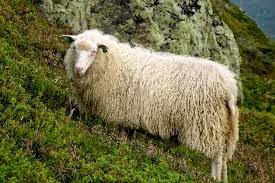
I love the story of the Great White Sheep ---It's a family story treasure


SKETCH OF THE LIFE OF SARAH MARIA TERRY WHITE, A UTAH PIONEER OF 1852 Prepared by Venus Robinson Rossiter A grand-daughter Sarah M. Terry White, daughter of William Reynolds Terry, and Mary Allen Phillips Terry, was of sturdy New England stock which dates as far back as 1626. In September 1838 her parents left their home in Exeter, Rhode Island and settled in Van Buren County, Iowa, where they heard and accepted the gospel in August 1841. They were baptized by Brothers Freeman Gillette and Jos. T. Ball several months later in the Des Moines River. Soon after this they had the spirit of gathering with the saints, and they sold their property and moved to Bancock County Illinois, near Nauvoo. Here they suffered the persecutions common with the saints at that time, being driven from place to place by their enemies, and having their property stolen and burned. Many times they went to bed fully dressed in fear of having their homes burned or pillaged during the night. Sarah was born in a covered wagon in Patowatomic County, Iowa, Oct. 9, 1848, during the time her parents were crossing the plains with the great Mormon migration westward. The family started west in 1847 in one of the earliest companies, but were twice called by the presiding authorities to give up their wagon and oxen, and to remain behind to plant crops, build wagons, and construct forts of safety for companies that were to follow, thus delaying their arrival in Utah nearly five years. Bro. and Sister Terry with their children, Albins, Dorcus, Mary Abbey, Sarah Maria, Joseph, Benjamin Franklin, and Silas (Leah Anne, Rosina, and Minerva Deseret being born in Draper later) arrived in the Great Salt Lake Valley Sept. 1852 with Washington Lemmon's Company. (Bro. Terry was Captain of this Company.) They camped a few days on Mill Creek and then moved south to Willow Creek, now known as Draper. Here Bro. Terry built the first adobe house, and planted the first fruit trees. Three months after their arrival he commenced teaching the first school in Draper with twenty five students in attendance. The settlement was so greatly molested by the Indians that they built a fort for safety in which they lived for a period of three years. They suffered all the privations of hunger and cold of that period; at times living on boiled mustard weeds and pigweed greens, sego roots, and occasionally a bran pancake. Bro. Terry was then called to go to St. George with his family, to St. George to assist in the building of the Temple. Not long after they were there, the river overflowed and the waters periled the new building. Bro. Terry worked long hours without rest to save their precious work, in the flood waters. This caused him to take pneumonia, and he died very suddenly leaving his wife with a large family. The family later returned to Draper. At the age of fifteen Sarah was married to Richard Herman White, a young English convert, in the old Salt Lake Endowment House. Although not much more than a child, she received a wonderful blessing, which at the time she could not understand. In it she was told that she would be the source of two separate nations. In time this was fulfilled as she later married a second time. A few years after their marriage the young couple moved to Ogden, Utah, where they built their home one half block east of where the Hotel Bigelow now stands. Here they prospered, owning the first Drug Store in Ogden, and also being associated in the lumber business with Mr. White's brother named Barnard white. The following children were born to them: Richard Terry, William Burgess, Annie Marie, Robinson, Ernest Atmore, George Q., Joseph Franklin, and Barnard. (The last three died in childhood.) They moved to Salt Lake City for a time, later returning to Ogden, soon after which her husband died leaving her a widow at twenty seven years of age with four small children. Left alone with her little family to care and provide for, she cast about for a means whereby she could educate her children and provide for them, and at the same time not be separated from them. She opened up a private school in the large front room of her home at 256 South 7th East, which was well patronized. Many now prominent citizens attended that little school. Up until this time her education had been very meager (as was the rule, rather than the exception in those days) so she decided to attend a night school which was being conducted by Mr. Joseph Ward, whom she later married. To them were born Mary Wiona (Burg) and Joseph Frank Ward, former bishop of Emigration Ward, Salt Lake City, Utah. Once more widowed with two additional children to care for, her health became impaired, and following a long serious illness, they were reduced to straightened circumstances. She was very proud and never complained, or let her condition be known nor asked for help from her relatives or closest friends. She always turned to the Lord for help and relief, who many times miraculously cared for her needs. On one particular occasion they found themselves without funds and nothing to eat in the house. She called her little family around her sick bed, where they all knelt in prayer, asking the Lord to send help to them in their hour of sickness and need. Scarcely had they finished their prayer, than they heard a scratching at the door, and upon opening it a great white sheep rushed in the house, bleating and refused to be driven out. It was a different species of sheep than they had ever seen having long silken hair. To all their inquiries no trace of where the sheep had come from could be found. Soon after the unusual appearance of this sheep a large box of groceries and a sack of flour were left at their rear door. Years later, Bro. Sears who kept a grain store bore testimony in fast meeting of the 11th Ward that while working in his store, a voice spoke to him three times telling that Sister White was in need and for him to send a supply of food to her, which he did immediately. Sister White as a woman of great abiding faith in God and in man. The above incident is only one of many that might be related to show her infinite trust in God. Second only to her great faith was her boundless charity, for even in times of need, she was never too poor to divide with those who were less fortunate then she. She was a ministering angel to the sick and needy, and a comfort to those in trouble and a strength to the weak. No one ever left her door hungry, whether for temporal or spiritual food. To have known her was to be uplifted and better. Later in life she studied medicine, and was a practicing mid-wife for more than thirty years. In all her practice, in which she delivered in the neighborhood of one thousand babies, she never lost a single mother or baby. Never did she go out on a case before getting down on her knees and asking God for wisdom and strength, nor was any distance too great, nor any night too stormy, or disagreeable for her to go out on call to the sick even though she were obliged to walk miles alone in a storm and in many cases knowing she would never be recompensed for her services. Her charitable cases were innumerable. In one case I know she delivered and nursed eight children in the same family without ever receiving a penny for her services. Although her opportunity for schooling had been very limited she was a cultured and educated woman, for she was a great lover and student of the classics and fine literature. For thirty five years she was a teacher of the Theological Class in the Eleventh Ward Sunday School, and a Relief Society teacher in the same ward for even a greater period of time. She was a perfect lady, having a queenly bearing, and a rare quiet dignity that few possess. So great was her trust in mankind, that she never possessed a key to any door in her house during her lifetime, and nothing has ever been known to be taken from her premises, even after her death when the old home, which is still standing was left unoccupied for a period of two years, the spirit of her, still seemed to permeate the place, for not as much as a single window pane was broken or disturbed. She died at the age of sixty-nine years, Dec. 17, 1917. She was mourned and loved by many in all stations of life. She left a posterity of six living children, forty grandchildren, forty seven great grandchildren, and three great great grandchildren, a total of ninety six descendants. She was a true friend, a faithful Latter-day Saint, and a real mother of Israel. Truly one of God's choicest spirits.

  • My grandfather William Burgess White used to tell me stories about his mother and how he loved her. His eyes would glisten with tears and he would say, "Shes an angel and I know she watches over me." His mother loved to hear him sing and taught him songs he sang to me like the "Baggage Car Ahead". I have a recording of him playing the piano and singing that was made on a wire recorder in 1941. David Arnold White

Tuesday, May 6, 2014

William Reynolds Terry

I decided to search some of Chris' ancestors and discovered a pioneer ancestor he didn't know about

I told him when he got home that day that there was someone he needed to meet.

I had printed a picture of him and put him on his desk.  Then I read the story to him.

I think he his strengthened by a ancestor who knew and defended the prophet Joseph Smith.


Our Pioneer Heritage Volume 15 Eight Pioneer Biographies William Reynolds Terry, He Answered Every Call The diary from which this was taken was retrieved from the debris after the flood at St. George. (aubmitted by Minerva Deseret Terry Andrus) I, William Reynolds Terry, born June 2, 1812 at Exeter, Washington County, Rhode Island, to Moses Terry and Sarah Reynolds, lived with my parents until one year old, thereafter was raised by my grandfather, Stephen Reynolds, until I was thirteen years of age, when my grandfather died at the age of seventy-six. During this time I was sent to school one year and seven months, the remaining time working on grandfather's farm. My father having sons, William Reynolds, Stephen, Seth, Burgess, Elliott, Silas W. and Barber W., didn't call for my services and left me to shift for myself. I went to live with a man by the name of Avery Browning, who joined farms with my grandfather. When eighteen years of age I went to Volinton, Connecticut to work in a cotton factory. At the age of twenty-two I was made overseer of the cotton factory in South Kingston, Rhode Island, owned by Thomas and Jonathan Hazard, where thirty men, women and children were employed. Here I became acquainted with Mary Allen Phillips, daughter of John Phillips and Polly Allen, whom I married December 20, 1835. The following October 5, 1836, our first child, Albina, was born. Early in April we moved to the house of James Dixon. Here on April 13, 1838, our second child, Dorcas, was born. I made preparations to leave my family and explore the western frontier states of North America. After procuring provisions, food and house room for my family and settling my affairs, I left my wife and two babes April 23, 1838. In company with Stephen A. Wright, we headed for the state of Illinois traveling by train, canal boat and steamer thru New York, Pennsylvania, down the Ohio River to the Mississippi; thence to St. Louis, arriving there the 12th of May 1838, a distance of 1500 miles. Thence to Rockland, Illinois. We spent two weeks viewing the country and bargained for a claim two miles from a town on the Mississippi by the name of Port Byron, three miles from the Rock River in the fork of the two, for which I paid ten dollars. We commenced the journey homeward by way of Chicago, up the lakes to Buffalo, visited Niagara Falls, thence to Albany and New York City, arriving home June 20th after a journey of five thousand miles in a little more than two months, and the payment of $100.00. I devoted the time from June 20th till fall selling my household furniture, settling my business and visiting my relatives. On the 2nd of Sept. 1838, I, with my wife and children, left our native land destined for the state of Illinois. After many hardships and exposures, we landed at Pittsburg, October 1st. The river being low and no boats running, I was under the necessity of building a flat boat, along with two other men bound for the same place. As we were about to go aboard, Mr. G. P. Stedman found his brother Christopher of Rhode Island bound for the same place. He prevailed upon us to sell our boat and all build another large enough to accommodate him and his family, which we did. It was thirty-two feet long, eleven feet wide, decked over twenty feet, and cabined off four berths. We left Pittsburg, November 1st, floating down the Ohio for three weeks without any serious mishap. At Marietta, Ohio, we landed and waited a few days for the river to rise. Took a steamer for St. Louis, and landed there the last of November, where my wife and children were taken sick with measles, which detained us under very heavy expense, until the 1st of January 1839. Boarded a steamer again for Quincy, Illinois, where I rented a room and left my family and started out on foot on a scouting trip in the surrounding country. At that time there were few settlers and the country was open for making claims. Two miles east of Columbus, Iowa, I bought a claim of eighty acres for $200 for which I got a warranty deed. I then returned to Quincy to my family. There I saw some Latter-day Saints and I bought a yoke of oxen and a horse from them and left in February for Iowa, my new home. We landed at Columbus, remaining there a few weeks until I built a cabin on my uncultivated land. We had traveled 2500 miles in six months, costing five hundred dollars. This was April 1839. I went to work, fenced, broke and planted forty acres. Built two log houses, a two-story log barn, crib, sheds and other buildings needed for chickens and pigs. Transplanted apple, peach sugar, butter-nut and black walnut trees. Sunday the 12th of July, the third daughter, Mary Abbey, was born. In August 1841, two Mormon Elders named Truman Gillett and James T. Ball were sent from Nauvoo, Illinois, to Van Buren County, Iowa. They came to the house of John Lucas, whose farm joined mine. There I, with my family, attended their meetings and for the first time heard the Gospel of Jesus Christ by those who were sent and qualified under the direction of God. The discourse that fell from the lips of those two men that day penetrated my heart, that I feel to thank the Lord for this day. The following December 1841, my wife embraced the truth, and the 20th of March, 1842, I was baptized in the Des Moines River and confirmed by Truman Gillett. They organized a branch in the neighborhood by the name of Bentonport, and by the unanimous vote of the members I was ordained an Elder by Brother Truman Gillett and James T. Ball. On Monday, June 6, 1842, Joseph, our fourth child and first son, was born. Soon after this, I had the spirit of gathering with the Saints, so I traded my farm for one-fourth interest in a mill and forty acres of timber land on the west fork of Crooked Creek, Deahean Mill, Hancock County, Illinois, eighteen miles east of Nauvoo, October 1842. On January 1, 1843, for the first time, I had the privilege of seeing the Prophet Joseph and Apostle Brigham Young at Macedonia. February 2, 1844, William, our second son, was born. He was blessed February 12th by Uncle John Smith, the Patriarch. This child departed this life May 10, 1844, at age three months and ten days, and was buried at Macedonia, Hancock County, Illinois, twenty miles east of Nauvoo. June 20th the Prophet Joseph, seeing that the Saints were in danger, called for all the men to gather at Nauvoo to defend the city for the mobs had sworn to destroy the people and burn the city. I left my family and traveled through the mud, wading creeks and sloughs all night and arrived there at nine o'clock in the morning. There we were under martial law for three days expecting the enemy to attack us. The last time I ever saw the Prophet was before the Nauvoo Legion's Parade on the banks of the Mississippi. A day or two after that Joseph and Hyrum delivered themselves into the hands of their enemies on pledge of the governor of safe delivery to Nauvoo. The governor had them put into prison with the Apostles Willard Richards and John Taylor. The governor caused the Church to give up their arms, which they held legally as citizens of the state. Then the governor, with his men, made their way to Nauvoo and delivered a very abusive speech to the Saints. This was to excite our attention and the plan concocted with another portion of the mob to murder the Smiths at Carthage, for it was carried into effect at the same time. Both Joseph and Hyrum Smith were killed, and John Taylor receiving several shots was near death, June 27, 1844. At the time of the murder, I was five miles northeast in the open prairie and heard the discharge of a number of small arms. Two men being with me, I exclaimed, "That report was from Carthage." Soon after I visited Carthage and saw the ball holes in the door that killed Hyrum. He fell backwards by the east window. The blood stains were plain to be seen on the floor. There were many of the bullet holes in the plaster. Brother Joseph jumped out of the window and was shot. In the month of August I moved on a patent claim, built a cabin and fenced and broke twelve acres. April 15, 1845, our sixth child and third son, Benjamin Franklin, was born. In the middle of May 1845, I traded my mill property to Joel H. Johnson for two lots and a story and a half brick house, a good well of water and a back stone house (cellar) in the town of Macedonia for $500. In the month of September, the mob began to burn wheat stacks and turn the Saints out of doors, sick and well, old and young. We were on guard day and night, and moved most of our goods to the city of Joseph for safety, so we suffered very much at night for need of beds and clothing. My wife tied the children's bonnets and shoes on at night expecting our houses to be burned to ashes by the mobs. I, with my wife and children, Albina, Dorcas, Mary Abbey, Joseph, Benjamin Franklin, Sarah Marie and Silas, arrived in Salt Lake Valley September 9, 1852. We camped several days in Mill Creek above Brigham Mill, then traveled south about twenty miles to Draper, then known as Willow Creek, September 18th. On the 20th we camped on the south side of the settlement on a piece of land selected for a farm; went to work and made 4500 adobes and built a one-story house 16 by 26 1/2 feet. Several heavy snows fell before it was finished. My wife was expecting to give birth to a child, and she and the children were suffering much from cold and exposure. The house had a willow roof and cloth was used as windows. It was the first adobe house built in Draper. Leah Ann was born the night of the day that it was completed, December 13, 1852, our ninth child. The same day I commenced teaching school with twenty-five pupils, being the first schoolmaster of Draper. Also planted fruit trees. After building our house, clearing and planting a farm of twenty-four acres, the Indians became so troublesome that I and others of the settlement built a fort where we moved our families for protection. Here we lived for three years. Our tenth child, Rosiana Phillips, was born July 7, 1856. On November 24, 1856, I was ordained a High Priest at Bishop Hunter's house in Salt Lake City. February 14, 1857, I was set apart as first counselor to Bishop Isaac Stewart of Draper by Brother Parley P. Pratt. March 1857, I deeded my property to Brigham Young and succeeding officers in the Church at Salt Lake City. Helped to build roads, bridges and canals, acting as Superintendent for the Cottonwood Canal, over twenty-four men. When Johnston's Army came I moved my family, cattle and three hundred bushels of wheat to Pleasant Grove, then known as Battle Creek. Ten years after our arrival in Draper, we had made a comfortable home and were prospering, when I was called by Brigham Young to go to St. George to take charge of a cotton mill, having been superintendent of cotton mills in Rhode Island before coming west. Here once again, we built a home, when everything we possessed was washed away in a flood that came upon us in the night. We barely escaped with our lives. Note: Wm. R. Terry died of pneumonia in St. George, Utah, May 30, 1868, and was buried there. His family returned to their home in Draper, where his wife, Mary, lived until her death, October 9, 1898. The diary from which this was taken was retrieved from the debris after the flood at St. George.?Minerva Deseret Terry Andrus
  • The trip across Iowa and the stay in Winter Quarters for 1-2 years preparing for the journey to Salt Lake City is omitted. It is recorded in his diary. I will add this info later. Boyd E. Terry


Thursday, May 1, 2014

Butch Cassidy and my Great Grandpa


"A Visit to Colton" by Kerry R. Boren
A VISIT TO COLTON
Colton, Utah, is the kind of town which my late father used to say was so small that the town sign might read "Entering Colton" on one side and "Leaving Colton" on the other. It is nothing more than a run down service station, with 1950's style pumps, attached to a weathered old house in the middle of nowhere on State Road 6 in central Utah. Colton lies about halfway between Spanish Fork and Price, just a little northwest of Robbers Roost.
 
The only business accorded the run down gas station stems from travelers who find themselves short of gas to make it into Price, or those who want a few snacks and a restroom before continuing their journey. There is a local clientele who return to the station to pass the time of day and hear the tales of the station’s proprietor, an old gentleman named Dennis Finch.
 
The interior of the place is filled with antiques and "home stuff", as Mr. Finch calls it. On the counter are several photos in old frames. One of the photos shows a young woman with a pet bear; the other shows three rather dignified looking men from a bygone era. Mr. Finch is more than happy to talk about them.
 
His parents were Charles Harold Finch and Etta Elizabeth Elmer. His mother was born 28 November 1906 in Payson, Utah, a daughter of Orrin Elton Alma Elmer and Sylvia Estelle Jones. They were married 5 November 1929.
 
"Thi s is a picture of my grandma when she was only eighteen," he says, picking up the picture of the young woman with the bear. "Four years after this picture was taken in 1928, my mother homesteaded this land and built this store in 1932 [his math was a little off; she would have been 22 in 1928]. Her pet bear was the main attraction to bring in customers. People came from miles around to see this big old bear who was taller than a man when he stood on his hind legs, but as gentle as a puppy. But he looked so big people were afraid of him, so my folks kept him in a cage outside. This was a great benefit to my dad, because whenever he got drunk and my mother kicked him out of the house, he would curl up with the bear in the cage outside. But over the years people poked and prodded at the bear in the cage so much that he became so mean my mother and father could no longer keep him. They gave him to a man who had several bears that lived free up in the Uintah Mountains, away from the cruelties of people."
The old man added the story of his mother’s pet porcupine which she rescued from a bear trap, and which became so friendly to her that it followed her around like a dog. She could pet its nose, he said, but if anyone else tried, they ended up with a hand full of quills.
 
"T his building has been moved twice from where it originally stood," he said. "When this town was originally founded it stood on the other side of the highway at the bottom of the hill." He points to a painting on the wall and continues, "You can see how it looked back then. When they decided to move the road up here, the store and house were torn down piece by piece and rebuilt where that big parking lot is out front. It stayed there for years until they built the new highway and once more my folks disassembled it and rebuilt it where it is now. They added two more sections to the house this time; this part and the kitchen was the original house and store, while the other end of the house was that of an old abandoned house and the middle was all new."
 
The old man talks about his grandfather, Orrin Elmer, with great reverence. He calls him "Horrin," perhaps with a remnant of an English brogue.
"My family moved to this area looking for the American dream, like so many before them. My grandpa Horrin grew up next to Robert Leroy Parker, better known as Butch Cassidy. Back when the town was on the other side of the highway at the bottom of the hill, my grandpa Elmer owned the motel and was the local sheriff."
 
He grabs up an album from beneath the counter and displays a picture of Orrin Elmer wearing his sheriff’s badge and sixshooter, standing in front of the old hotel.
 
" Even though Butch and my grandpa were on opposite sides of the law, they stayed good friends. Whenever Butch came into town, Grandpa would give him a room and stable his horses. They knew each other all their lives."
 
Or rin Elton Alma Elmer was born 16 January 1873 in Payson, Utah, a son of Henry Elmer (1841-1928) and Sarah Ann Beckstead (1851-1944) [Orrin Elmer is a distant cousin of co-author Lisa Lee Boren, who is a descendant of the Becksteads]. Henry Elmer, who was born 7 March 1841 in Sand Prairie, Adams County, Illinois, came to Utah among the early Mormon pioneers with his parents and settled in Payson, Utah. The Peteetneet Town Book has the following interesting notation:
 
" The early Payson locals believed that Payson had the first free schools after the territorial legislature passed a bill to allow cities to levy a tax to build and support public schools. Schools were held in homes before that time. Henry Elmer and Eddie Dixon both said they once attended school in William Wrightman’s home at 307 W. 400 N. in Payson. Text books that were used in these schools were the Bible, Websters blue-pack speller, McDuffy’s Primer, Ray’s Arithmatic [sic], and classics."
 
Henry Elmer was an Indian War Veteran, having fought in Utah’s Black Hawk War in 1865. He died in Payson 14 December 1928.
Orrin’s mother, Sarah Ann Beckstead, was born 14 March 1851 at Traitors Point, Pottawattamie County, Iowa, a daughter of Sidney Marcus Beckstead and Ann Sophia Rollins. Her father accidentally killed himself on 7 August 1864 when she was only 13. He had climbed aboard his horse in Nebraska and in reaching down for his rifle caused it to discharge, killing him instantly.
 
Orri n Elmer married Sylvia Estelle Jones on 6 December 1893 at Manti, Utah, when he was 20 and she was 17. They eventually had four children: Sylvia Ann, Cora Pearl, Etta Elizabeth, and Arthur Elmer. Orrin Elmer died 13 November 1962 in Provo, Utah.
 
"Sho rtly after the house was rebuilt for the third time," Mr. Finch continued, "a man came to the door and walked slowly up to the counter. My mom asked, ‘Can I help you, sir?’, and the man slowly looked left and right. He then pulled out a small hand gun and said to her, ‘This is a robbery, give me all your cash!’ My mom only laughed because she thought the man was carrying a toy gun. She grabbed it and took it from the man’s hand and said, ‘This is a nice toy. How do they make it look so real?’ The man grabbed the gun back from my mom and opened it to show her that it was a real gun. He was so shocked at her behavior that he never did rob the store. He turned and walked out the door. In those days, most guns were large; my mother had never seen a small handgun before.’
 
The old man finally gets around to telling the story that is of the most interest to us.
 
"It must have been about 1931 [more likely 1932, when the store was built] when a man came into the store and asked my mom if Horrin Elmer was around. She asked why he wanted to know and he said he was an old friend and wanted to see him again after being away for many years. She directed him to the bear cage outside where my grandpa was playing with the bear. The man went out and my mom saw the two men shake hands real hard and kind of hug one another, and they stood and talked for a long time. The man stayed for supper and afterward my grandpa and him talked again for a long time. Then he climbed into his car and drove away.
 
"Aft er the man was gone, my mom asked grandpa who the man was, and he said, ‘Why, that was Butch Cassidy, my old boyhood friend.’ But he told her she should never tell anyone who he was because he might still be arrested for his crimes. My mom thought it was strange that her day, who was a sheriff, would protect a wanted man from arrest, but she never told anyone who the man really was."
 
Denn is Finch has proof of his claim that Orrin Elmer and Butch Cassidy were friends. He displays the photo of Butch Cassidy, Ronald Wall, and Orrin Elmer taken together during one of their reunions, and he will show it to anyone who wants to hear his story about how Butch Cassidy stopped by for a visit.
 
There is an interesting aside to the above story. Lauri Massey, a cousin of Orrin Elmer, was also cousin of the Lewellen family who operated a service station at Soldier Summit, a few miles northwest of Colton. The Lewellens have a photograph of their ancestor standing with Butch Cassidy in front of their gas station at about the time he visited Orrin Elmer. Today, the once bustling town of Soldier Summit is virtually a ghost town, with only a two room jail and a few original outbuildings still standing. It was here near the turn of the last century that Butch Cassidy met with Uinta County, Wyoming, Sheriff John Ward to discuss turning himself in for amnesty.


Friday, January 10, 2014

Truman O Angell

Brycen had to do an ancestor report for school.  He chose to do it on Truman Angell

My ancestor is Truman Angell.  He is my 4th great uncle.
He was born in Providence, Rhode Island on the 5th of June in 1810.  He lived there until he was 21.
His father left the family when he was young, and Truman tried to help his mother.  He moved her
to New York to be with some friends.   While they lived there they joined the Church of Jesus Christ of Latter-Day-Saints
Truman also married Polly Johnson.  At about 23 years of age he went on a mission for about 9 weeks to Rhode Island.
His missionary companion was Joseph Holbrook.  Joseph Holbrook also happens to be my 4th great grandfather.  Joseph
married Truman's sister Caroline.
Truman and is wife moved to Missouri.  His mother decided to stay behind.  They were driven out of the state of missouri
by mobs who did not like the Mormons.  
They moved to Kirtland Ohio.  Truman helped do work on the Temple that the Mormon Saints were building there.
Joseph Smith asked him to help build it.  He was also able to attend the Temple Dedication which was a very special 
experience.
Truman's family moved to Nauvoo when the Saints were again forced from their homes.  His wife and children were sick and
it was a difficult time.  Truman was called to be the superintendant of joiner work (joining the parts of the building)
Truman said that they were all persecuted by angry men and he was so sad when Joseph Smith and His brother, Hyrum, were 
killed.  When the architect of the temple left Nauvoo, Truman was left in charge of completing the lower hall of the Nauvoo temple.

Truman said, " I was one of the Pioneers in coming to and making a home for the Saints in Utah in 1847, and returned to Winter Quarters. The 

following winter I made a fitout and took my family, in the spring, and started for our new home, arriving in Utah in the fall with an ox team, a 

distance of over 1000 miles, moving my sick wife on her back every rod of the way, having two children with us, having buried three in Winter 

Quarters. Soon after my arrival I was chosen architect for the Church--the former architect, William Weeks, having deserted and left for the east, 

thereby taking himself from the duties of the said office--which position I hold to this day. (1883)"

Truman was asked to work on many buildings in Salt Lake City.  He helped with the Saint George Temple.  He was the
main architect of the Salt Lake Temple.

This is a quote I found about him:  Truman O. Angell, the architect, now approaching his seventieth year, worked with President John Taylor as he had with President Young. The walls of the temple were pushed upward. By 1887 the stone work was completed, except for the towers; but fate did not permit the architect to live to see the finished building, Truman O. Angell died on October 16, 1887, at the age of 77. For more than thirty-five years he had toiled and labored on the great structure. It was said that he knew every stone in its walls. 


Of Truman O. Angell, Wendell Ashton has written: "As long as the Salt Lake Temple stands, there will be a magnificent monument to the patience, skill and dedication of its architect."]
 
I think this is a really great man to be my ancestor  I am also blessed because my Great Grandpa Timmerman was the resident architect of the Washington DC Temple (see this post)


Truman O Angell


Tuesday, July 16, 2013

A prompting leads to a discovery

My mom and I have been searching and searching for the name of our Great/2nd Great Grandmother for a long time.  She has searched since I was born.      I have honestly searched some days for 10 hours straight (because it is so addicting to keep looking) for the past 5 months.
Last night she called me and said she thought one of the names we had considered before might be the one--
she was feeling it was right.  The clue we uncovered and suddenly felt so strongly about was "Butch"
My mom had told me that my Great Grandmother used to call my Great Grandfather "Butch" - his name was William George Nelson.  We just thought it was her nickname for him.   My mom also was given a chain/locket with "Butch" engraven on it.   We have been looking for his mother - who we thought should have the Maiden name of Nelson.   However the realization came to us that Butch could stand for "Butcher" because there was a Louisa Butcher Nelson who had died in 1891 about the exact time that William George was taken into the home of the Binder's who raised him.  We decided to go downtown this morning and kept saying how "Butch" may be the clue.    We went into the special collections room and after several failed attempts at finding the right microfilm, I slowly scrolled through the names of Butcher......when I got to the "L's" for "Louisa" I could feel it was going to happen--and there it was...  Louisa Butcher's temple work was
done by William L Binder.   It was incredible to realize it.  We both yelled (a little too loudly for the room) "We found her!  We found her!  and we hugged and cried and it was so wonderful!

It brings tears of joy to think we know can know her name and more about our family....

I've already discovered some crazy stories that I will share in another post.

LOUISA MARIA BUTCHER (NELSON) is my Great Great Grandmother!


Monday, February 25, 2013

Where in the world is George Cook Binder??

I've been searching for this man all over the past......

I've found bits and pieces but I especially wish I could figure out his father's name (Last name most likely Cook)  and his child's mother's name (last name most likely Nelson)


I like searching for clues....but so far nothing has solved the mystery completely